Why Consultants Are Switching from Bullet Lists to Visual Mindmaps
 Juan Liriano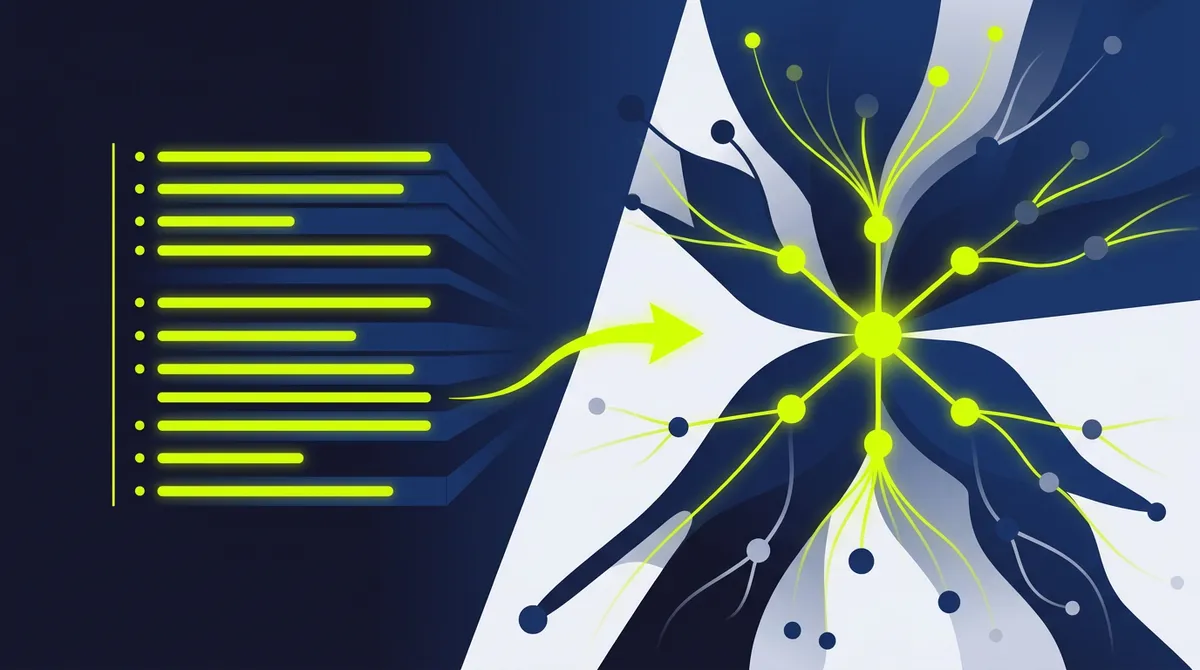
Bullet lists are the default deliverable format in consulting. They are fast, familiar, and universally understood. They are also holding your work back. Here is why a growing number of consultants are replacing bullet-list documents with visual mindmaps -- and what changes when they do.
TL;DR
Bullet lists are linear. Strategy is not. Visual mindmaps communicate relationships, hierarchy, and dependencies that flat lists obscure. Consultants who switch to mindmaps report faster client comprehension, fewer "can you clarify" follow-ups, and deliverables that get referenced long after the engagement ends.
The Problem with Bullet Lists Nobody Talks About #
Bullet lists are sequential. Item 1 comes before Item 2, which comes before Item 3. This structure works for processes, instructions, and ordered tasks.
Strategy is not sequential. A marketing strategy has channels that run in parallel, budgets that span multiple initiatives, timelines that overlap, and dependencies that cross categories. A bullet list flattens all of this into a single dimension.
When you present a strategy as a bullet list, you are asking your client to mentally reconstruct the relationships between items. "Budget" appears on line 14. "Paid advertising" appears on line 6. "Q3 timeline" appears on line 22. The client has to hold all of these in working memory and connect them -- a cognitive task that the deliverable format should handle for them.
A visual mindmap makes every relationship explicit. Budget connects to the channels it funds. Timelines attach to the phases they govern. Dependencies are visible, not implied. The client understands the structure by looking at it, not by reconstructing it from a flat list.
What Changes When You Switch #
Client Comprehension Doubles #
The average consulting deliverable gets skimmed, not read. Partners and directors flip through slide decks and bullet-point documents looking for the key numbers and recommendations. Most of the supporting logic -- the part you spent 40 hours developing -- gets ignored.
Mindmaps invert this pattern. The visual hierarchy guides the eye from the central thesis to supporting branches to specific details. A client can understand the high-level strategy in 10 seconds (read the branch labels) and drill into any area that matters to them (read the nodes under that branch).
This is not a theory. It is how visual information processing works. The human brain processes visual relationships 60,000 times faster than text. A well-structured mindmap communicates in seconds what a 10-page document communicates in minutes.
Info
The shift is not about making deliverables "prettier." It is about matching the format to how decision-makers actually consume information. Executives scan. Mindmaps are built for scanning. Bullet lists are built for reading.
Follow-Up Questions Drop #
When a client receives a bullet-list strategy document, the first meeting after delivery is almost always a clarification session. "Can you walk me through how the timeline connects to the budget?" "Where does the risk assessment fit relative to Phase 2?" "How do these three workstreams relate to each other?"
These questions are not about missing information. The information is in the document. The questions are about missing structure. The client cannot see how the pieces fit together because the format does not show relationships.
Mindmaps eliminate 60-80% of structural clarification questions. When the client can see that the Phase 2 timeline branch connects to three parallel workstreams, each with its own budget node and risk assessment, they do not need you to explain it verbally.
That means your first post-delivery meeting focuses on strategic discussion -- "Should we reallocate budget from Channel A to Channel B?" -- instead of structural walkthrough.
Deliverables Get Reused #
Most consulting deliverables have a lifespan of about two weeks. They get presented, discussed, and then buried in a shared drive. The recommendations get extracted into a few action items, and the document itself is never opened again.
Mindmaps have a different lifecycle. They get pinned to office walls. They get referenced in subsequent meetings. They get shared across departments. The visual format makes them useful as ongoing reference documents, not just one-time presentations.
When a deliverable gets reused, your work has a longer impact horizon. That translates directly into client retention and referral probability. The consultant whose strategy map is still hanging in the client's conference room six months later is the consultant who gets the next engagement.
Tip
Export your mindmaps in multiple formats: PDF for email delivery, PNG for slide embedding, and a high-resolution print version for physical display. Clients who can print and hang your deliverable will keep it visible -- and keep your work top of mind.
When Bullet Lists Still Win #
Mindmaps are not a universal replacement. Bullet lists are still the right format for:
- Sequential instructions. Step-by-step processes where order matters. A mindmap adds unnecessary visual complexity to a simple sequence.
- Meeting notes. Quick, timestamped capture where structure is less important than speed.
- Status updates. Short, factual updates that do not require relationship mapping.
- Checklists. Binary completion tracking where the only information is "done" or "not done."
The rule of thumb: if the deliverable is about relationships and hierarchy, use a mindmap. If it is about sequence and completion, use a list.
How to Make the Switch Without Losing Clients #
Switching formats mid-engagement can feel risky. Your clients expect certain deliverable types. Here is how to introduce mindmaps without disrupting existing workflows.
Start with a Supplement #
Deliver your standard bullet-list document AND a mindmap version of the same content. Position the mindmap as a "visual summary" or "strategy overview." Let the client discover that the visual version is faster to parse and more useful in meetings.
After two or three engagements, most clients will start asking for the mindmap version first.
Use the Kickoff Meeting #
Build a mindmap live during the project kickoff. Share your screen, create the central topic, and build out branches as the client describes their challenges, goals, and constraints. The real-time construction demonstrates the value of the format -- the client can see their own strategy taking shape visually.
By the end of the meeting, you have a working project scope that everyone in the room helped build. That is a stronger starting point than any post-meeting summary document.
Let the Quality Speak #
Do not sell the format. Do not explain why mindmaps are better than bullet lists. Just deliver a mindmap with exceptional content in every node, and let the client respond to the quality.
The professionals who get the best results from mindmaps are not the ones who evangelize the format. They are the ones who deliver content so specific and actionable that the format becomes invisible. The client does not think "nice mindmap." They think "this is exactly what I needed."
Generate Client-Ready Mindmaps in 15 Seconds
Nodekit produces complete, content-rich mindmaps from a single sentence. Real substance in every node -- not labels, not placeholders. Built for consultants who need deliverables, not drawing tools.
Join the WaitlistThe Competitive Advantage Nobody Expects #
Most consulting firms deliver text-heavy documents. Slide decks with 40 words per slide. PDF reports that run 15-30 pages. The format has not changed in decades.
When you show up with a visual mindmap that communicates the entire strategy at a glance -- with content-rich nodes that prove the depth of your analysis -- you are delivering something your competitors cannot match with a template and a bullet list.
The format differentiation is subtle, but it compounds. Clients remember the consultant who delivered clarity. They refer the consultant who made their strategy visible. They rehire the consultant whose deliverable is still pinned to the wall.
Conclusion #
Bullet lists are comfortable. They are also the wrong format for communicating strategy, relationships, and hierarchy. Visual mindmaps match how decision-makers actually process information: scanning for structure first, then drilling into detail.
The switch does not require new skills. It requires a willingness to match the format to the content. When the content is strategic, interconnected, and multi-dimensional, a visual mindmap communicates it faster and more clearly than any list ever could.
Success
You now have a practical framework for transitioning from bullet-list deliverables to visual mindmaps -- starting with supplements, building client comfort, and letting quality drive adoption.

Related Posts

The Visual Thinking Advantage: How Mindmaps Improve Client Presentations
Slide decks are sequential. Strategy is not. Visual mindmaps let clients see the full picture at a glance, drive their own exploration, and retain 4x more information. Here is how to integrate mindmaps into your client presentations for shorter meetings and better decisions.
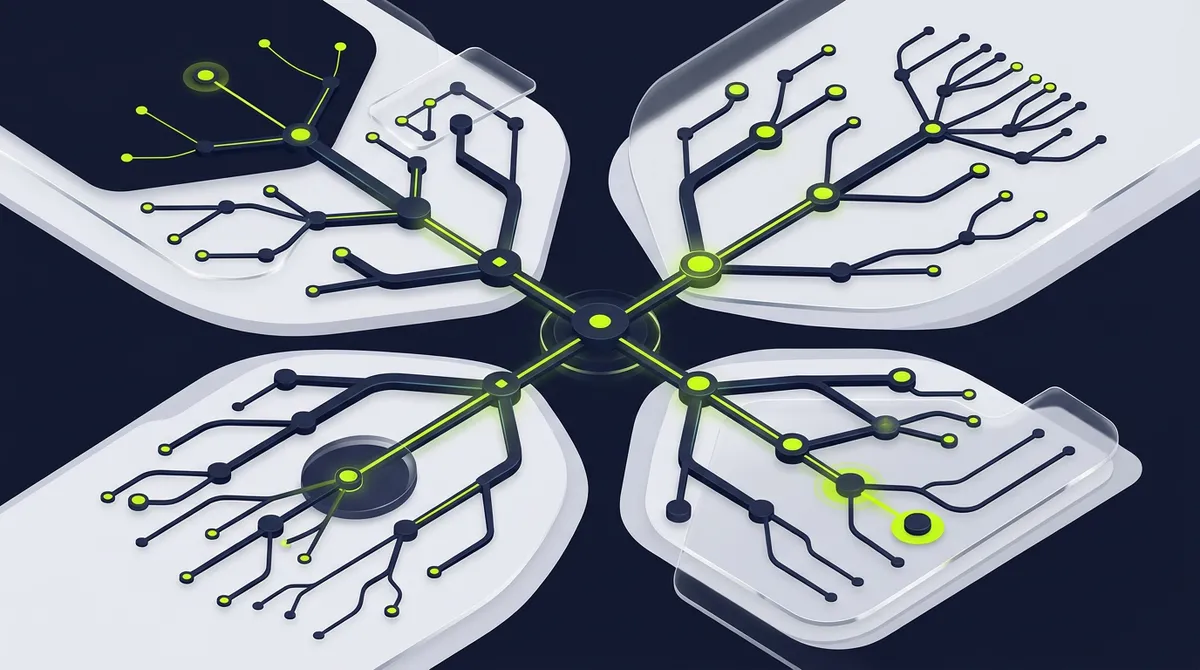
Mind Mapping for Professional Services: The Definitive Playbook
How consultants, project managers, and marketing leads at professional services firms use mind maps to produce better deliverables in less time. Real workflows, templates, and ROI analysis.

AI Tools for Professional Services: What Actually Saves Time in 2026
Not all AI tools save time for professional services firms. The ones that work target specific tasks and produce finished output. Here is a category-by-category breakdown of what delivers real productivity gains in 2026 -- and what is still more demo than deliverable.